The Rise of Regional Food Brands Going Franchise in India
India’s food industry is changing rapidly - and one of the biggest shifts happening right now is the rise of regional food brands expanding through franchising.
From Gujarati snacks and South Indian breakfast chains to Bengali sweets and Maharashtrian street food, regional food concepts are no longer staying local. They are becoming scalable franchise businesses with national demand.
Consumers today are actively looking for authentic, nostalgic, and culturally rooted food experiences. Standardized fast food still has a market - but regional brands are building stronger emotional connections with customers because they represent familiarity, trust, and local taste.
For founders, this creates a massive opportunity.
The brands that once operated as single-city success stories are now evolving into organized franchise systems capable of scaling across states and even internationally.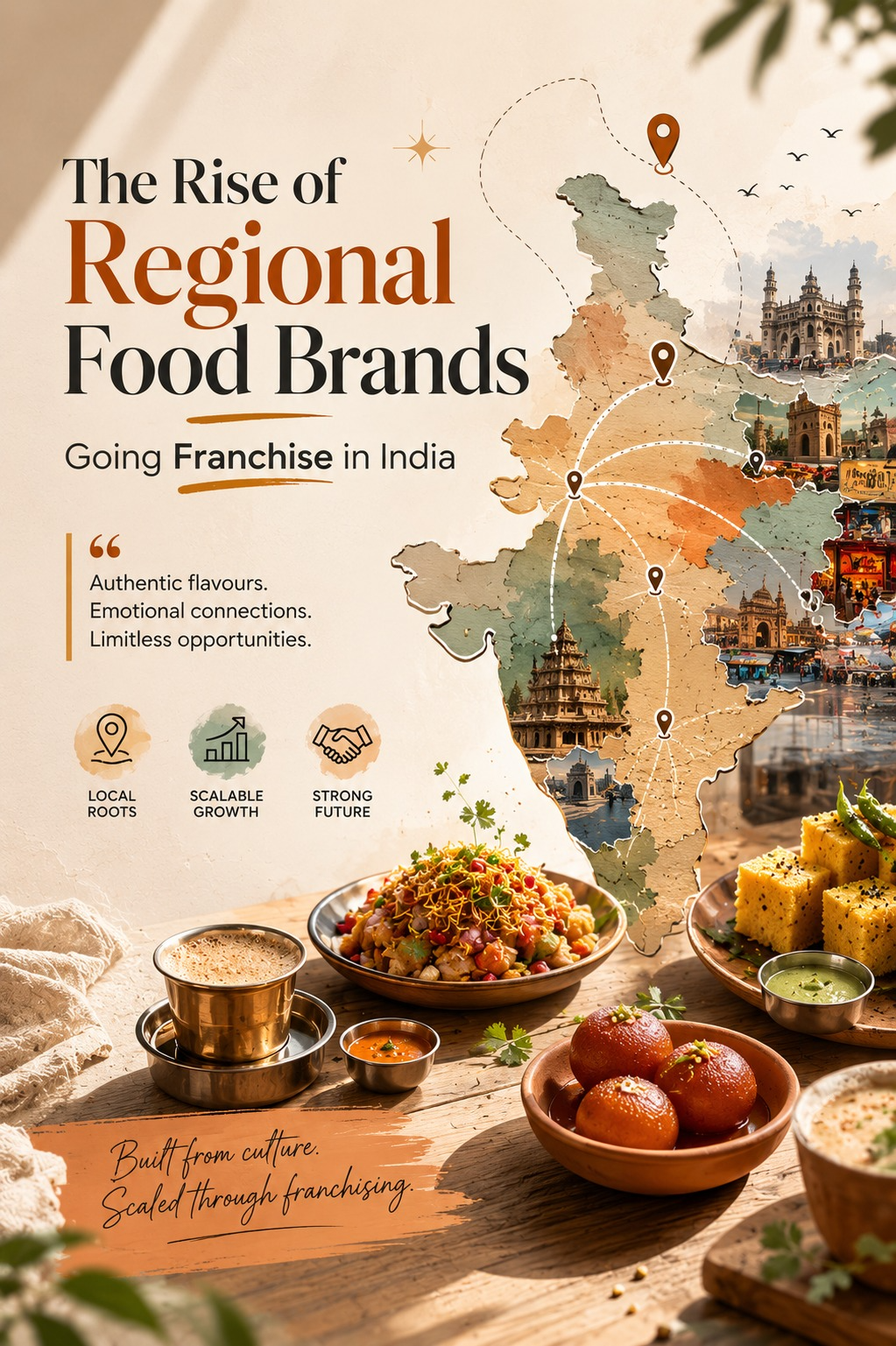
##Why Regional Food Brands Are Growing Faster Than Ever
For years, India’s organized food franchise market was dominated by generic QSR formats - pizza, burgers, sandwiches, and café chains.
But consumer behavior has changed.
Today’s customers want:
Authenticity over imitation
Regional identity over generic menus
Familiar flavors over trend-driven food
Traditional comfort food with modern presentation
This is exactly why brands built around local cuisine are seeing explosive traction.
A strong regional food brand already has something most businesses struggle to build:
Proven product-market fit
Emotional customer loyalty
Distinct identity
Organic word-of-mouth marketing
When structured properly, these strengths become highly scalable through franchising.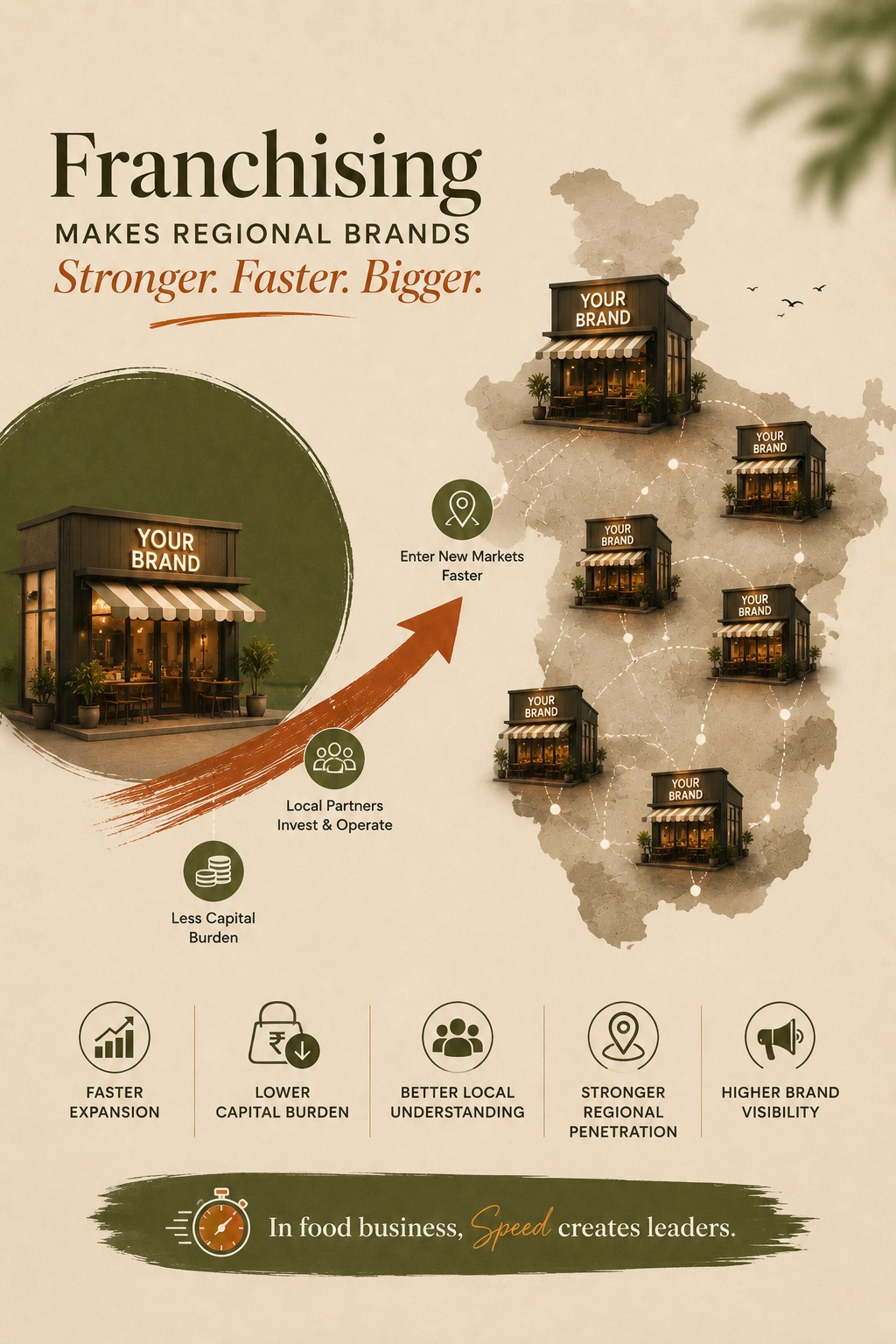
##Why Franchising Works So Well for Regional Food Brands
Most regional food businesses reach a stage where demand grows faster than operational capacity.
The founder cannot personally manage every outlet.
Expansion through company-owned stores becomes expensive.
Operations become inconsistent.
This is where franchising becomes powerful.
Instead of funding every outlet internally, brands scale using local franchise partners who invest capital, manage operations, and help the brand enter new markets faster.
The result:
Faster expansion
Lower capital burden
Better local market understanding
Stronger regional penetration
Higher brand visibility
For food brands especially, speed matters.
The first organized regional brand to capture a category often becomes the market leader.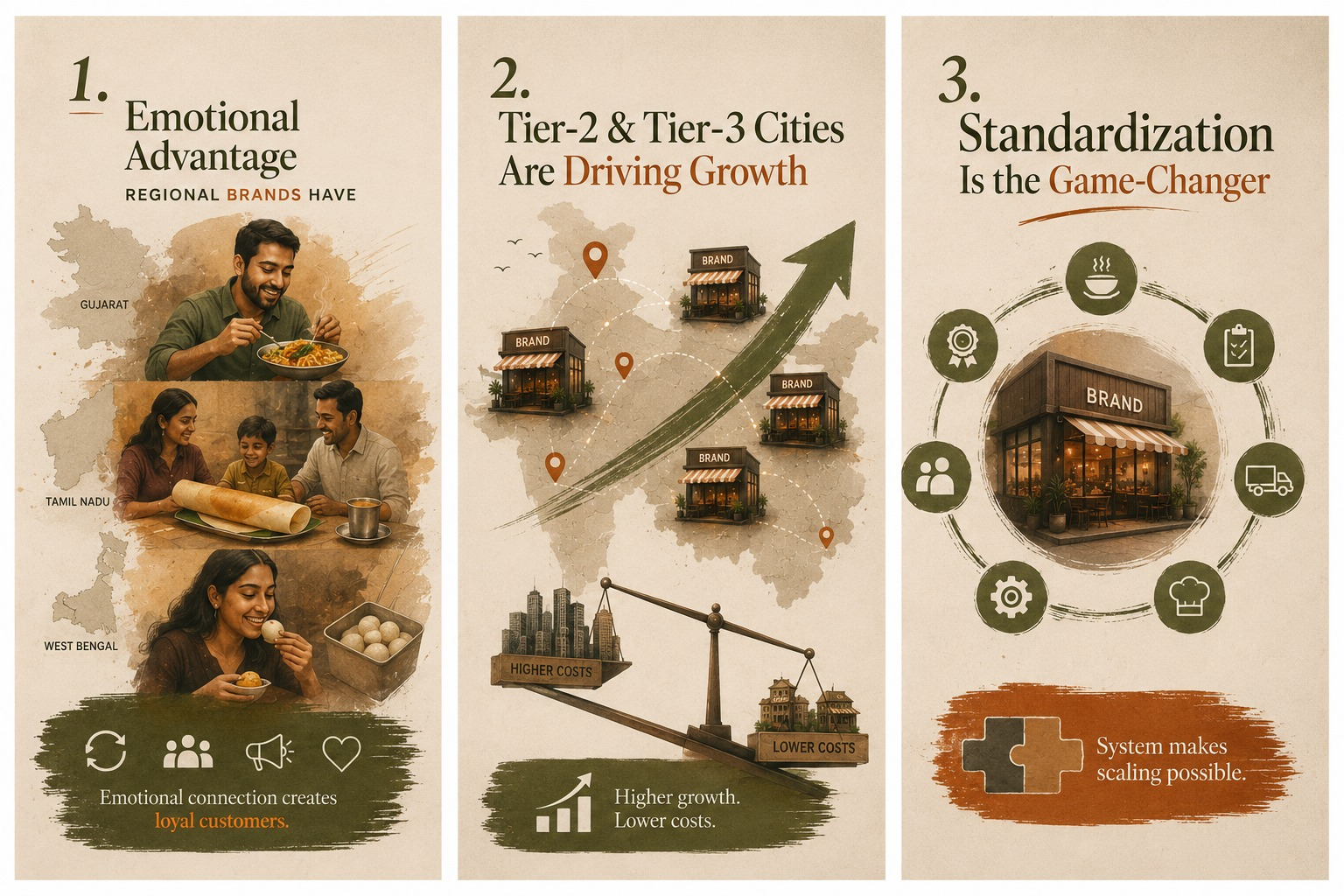
##The Emotional Advantage Regional Brands Have
Food is deeply emotional in India.
People do not just buy meals - they buy familiarity, memories, and cultural connection.
A customer from Gujarat living in Bangalore may actively seek authentic Sev Usal.
A South Indian family in Delhi looks for genuine filter coffee and dosa.
A Bengali customer in Mumbai searches for authentic sweets from home.
Regional food brands solve this emotional demand.
And because the emotional connection already exists, customer acquisition becomes easier compared to completely new food concepts.
This emotional loyalty also creates:
Higher repeat business
Stronger customer retention
Organic referrals
Community-driven growth
These are major advantages in franchise scalability.
##Tier-2 and Tier-3 Cities Are Driving the Next Wave
One of the biggest reasons regional food franchising is accelerating is the rise of Tier-2 and Tier-3 markets.
Consumers in smaller cities now:
Spend more on eating out
Prefer branded food experiences
Trust organized businesses more
Actively support culturally familiar brands
At the same time, rental costs in these markets are significantly lower than metros.
This creates a highly profitable expansion model for regional food brands.
Instead of competing directly with global chains in expensive metro locations, many smart regional brands are dominating underserved cities with stronger margins and lower operational pressure.
##Standardization Is the Real Game-Changer
Not every successful food business can become a franchise.
The biggest challenge is operational standardization.
A regional food brand becomes scalable only when:
Recipes are standardized
SOPs are documented
Vendor systems are controlled
Kitchen processes are repeatable
Staff training systems exist
Quality consistency is maintained
This is where many local food businesses struggle.
Customers may love the food - but unless the experience can be replicated consistently across outlets, franchising becomes risky.
The brands succeeding today are the ones converting traditional food businesses into system-driven operations.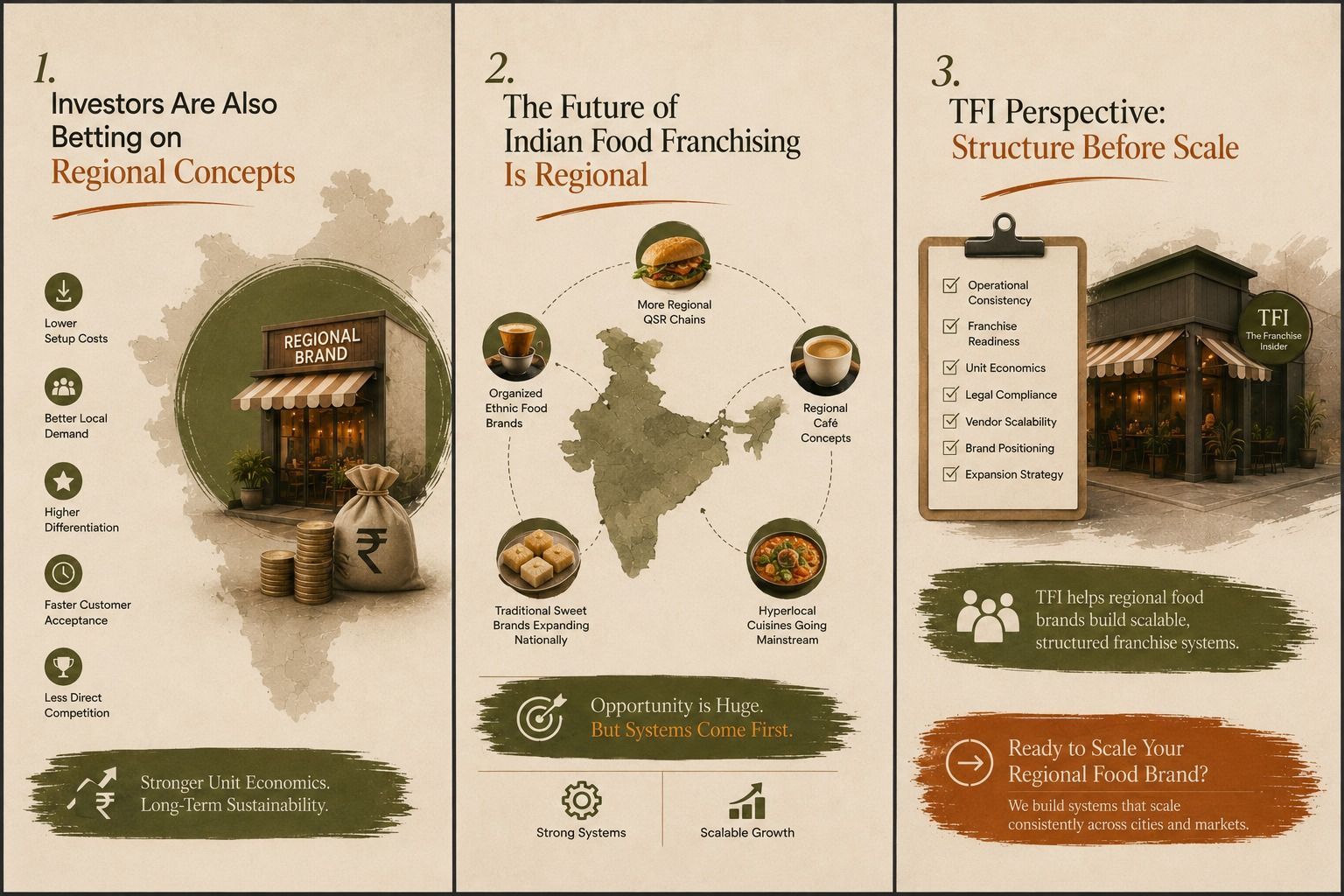
##Investors Are Also Betting on Regional Concepts
Franchise investors today are becoming more selective.
Earlier, many investors preferred international-style QSR models because they appeared safer.
Now the trend is shifting.
Why?
Because regional food brands often offer:
Lower setup costs
Better local demand
Higher differentiation
Faster customer acceptance
Less direct competition
Investors are realizing that authentic regional concepts often outperform generic food models in long-term sustainability.
A well-positioned regional food franchise can build stronger unit economics than trend-based food businesses.
##The Future of Indian Food Franchising Is Regional
India is too culturally diverse for a single food format to dominate permanently.
The future belongs to brands that understand regional identity and can operationally scale it.
Over the next decade, we are likely to see:
More regional QSR chains
Organized ethnic food brands
Regional café concepts
Traditional sweet brands expanding nationally
Hyperlocal cuisines becoming mainstream franchise categories
The opportunity is enormous - but only for brands that build the right systems before scaling.
Franchising does not fix operational weaknesses.
It amplifies them.
That is why regional food brands must focus not only on demand - but on structure, compliance, SOPs, profitability, and franchise readiness before expansion.
##The TFI Perspective: Regional Brands Need Structure Before Scale
At The Franchise Insiider, we believe India’s strongest future franchise brands will emerge from regional markets - not from copied international models.
But growth without structure creates chaos.
Before scaling, every regional food brand must evaluate:
Operational consistency
Franchise readiness
Unit economics
Legal compliance
Vendor scalability
Brand positioning
Expansion strategy
A food business may be popular locally.
That does not automatically make it franchise-ready.
The brands that scale sustainably are the ones that build systems before selling franchises.
That is exactly where TFI works with founders - helping transform successful local food businesses into scalable, structured franchise systems designed for long-term expansion.
##Ready to Scale Your Regional Food Brand Through Franchising?
If your food brand has strong customer demand and you are planning expansion through franchising, the first step is understanding whether your business is truly franchise-ready.
At The Franchise Insiider, we help brands build scalable franchise systems through strategy, structure, operational planning, and expansion frameworks designed specifically for Indian markets.
Because sustainable franchising is not about opening more outlets.
It is about building a system that can scale consistently across locations, cities, and markets.